
For developers and digital creators, monetization is one of the most important aspects of building sustainable projects. Whether you are developing mobile apps, publishing games, or running a website, advertising is often one of the first revenue streams developers explore.
Two of the most popular advertising platforms provided by Google are AdMob and AdSense.
Both platforms allow developers to earn revenue by displaying ads to users. However, they serve different ecosystems and operate in slightly different ways.
AdMob is primarily designed for mobile apps and games, while AdSense is focused on websites and online content.
For many developers who build both mobile apps and websites, a common question arises:
Which platform pays more — AdMob or AdSense?
The answer depends on several factors, including traffic quality, user behavior, geographic location, and how ads are integrated into the product.
In this guide, we will compare AdMob and AdSense from a developer’s perspective and analyze which one can generate higher revenue under different conditions.
Understanding AdMob
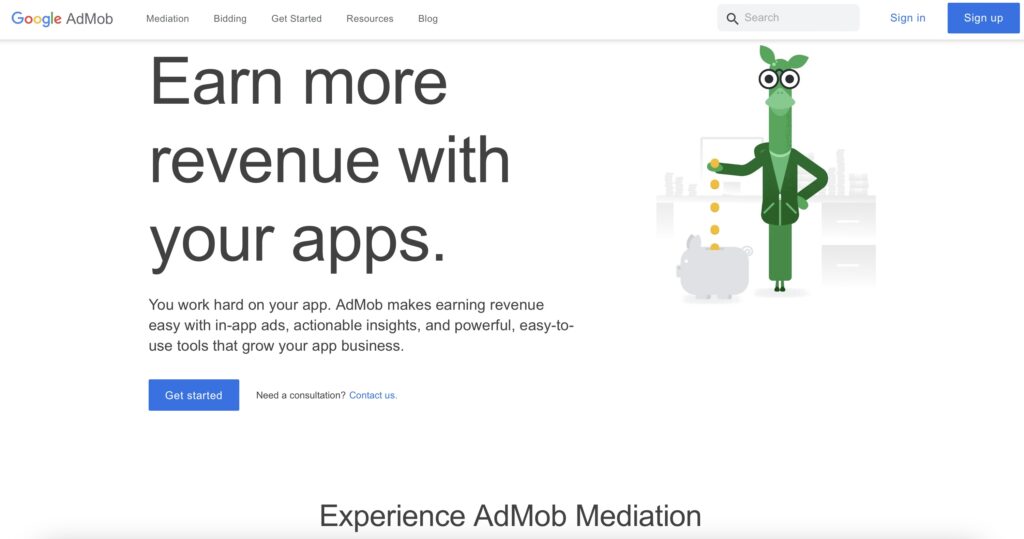
AdMob is Google’s advertising platform designed specifically for mobile applications and games.
It allows developers to integrate ads directly inside their apps. When users interact with these ads, developers earn revenue.
AdMob supports several types of ad formats commonly used in mobile apps:
• banner ads
• interstitial ads
• rewarded ads
• rewarded interstitial ads
• native ads
These formats allow developers to integrate ads naturally into mobile experiences.
For example, many mobile games show interstitial ads between levels or offer rewarded ads in exchange for in-game bonuses.
Because mobile apps provide interactive environments, advertisers are often willing to pay higher prices for certain ad placements.
Understanding AdSense
AdSense is Google’s advertising platform designed for websites and online publishers.
It allows website owners to display contextual ads on web pages. These ads are typically placed inside articles, sidebars, or between content sections.
AdSense works by analyzing the content of a page and displaying ads relevant to the topic.
For example, if an article discusses programming tools, ads related to software, hosting services, or online courses may appear.
AdSense offers several ad formats:
• display ads
• in-article ads
• in-feed ads
• matched content ads
• auto ads
Unlike mobile apps, websites often rely heavily on page views rather than long user sessions.
This difference plays an important role in revenue potential.
The Key Revenue Metric: eCPM
Both AdMob and AdSense rely on a metric called eCPM.
eCPM stands for effective cost per thousand impressions, which represents how much revenue is earned per 1000 ad views.
The formula is simple:
eCPM = (Total Earnings / Total Impressions) × 1000
Higher eCPM means higher earnings for the same number of impressions.
However, eCPM varies significantly depending on several factors:
• user location
• advertiser demand
• content category
• user engagement
• device type
Understanding these factors is essential when comparing AdMob and AdSense.
Traffic Quality and User Behavior
One of the biggest differences between AdMob and AdSense lies in user behavior.
Mobile app users often spend longer periods inside apps, especially games. This means they generate multiple ad impressions during a single session.
For example:
A mobile game player might watch several ads during a 10-minute session.
In contrast, website visitors often read an article and leave within a few minutes.
This difference affects monetization.
Apps can generate repeated impressions from the same user session, while websites rely heavily on continuous traffic.
AdMob Revenue Potential
AdMob revenue can vary widely depending on the type of app.
Games often perform well with AdMob because they provide natural opportunities to show ads between gameplay events.
Rewarded ads are particularly powerful.
Players voluntarily watch ads in exchange for in-game rewards such as coins, power-ups, or extra lives.
Because these ads are optional and engaging, advertisers often pay higher rates.
Typical AdMob eCPM ranges may vary from:
• $0.5 to $2 in lower-value regions
• $5 to $20 in high-value regions
However, actual earnings depend heavily on the number of active users.
Real-World Developer Insight: “When I launched my first casual game, True or False: Brain Quiz, on the ironSource and Unity networks, I learned firsthand that relying on a single ad network is a massive revenue bottleneck. If you just plug standard AdMob into a native app, you are accepting whatever flat rate Google offers.To maximize your mobile revenue, you must implement Advanced Ad Mediation. By setting up a unified auction environment where AdMob competes in real-time against bidding networks like AppLovin MAX, Unity Ads, and Mintegral, you force advertisers to bid against each other. This mediation strategy instantly lifted my mobile eCPMs from a predictable $1.50 baseline to a highly lucrative $8.00–$22.00 range for Tier-1 interstitial and rewarded video placements.”
AdSense Revenue Potential
AdSense revenue depends primarily on website traffic and content niche.
Certain niches have significantly higher advertising demand than others.
For example:
• finance
• software
• marketing
• hosting
• business tools
Websites focused on these topics often generate higher CPC (cost per click) rates.
Typical AdSense earnings may range from:
• $3 to $15 per 1000 page views
• sometimes higher depending on niche and traffic quality
However, website monetization requires consistent traffic growth.
Without regular visitors, revenue remains limited.
Real-World Developer Insight: “Monetizing web traffic requires an entirely different strategy than optimizing an app. On my content websites, I found that placing generic banners in the sidebar yielded almost nothing due to ‘banner blindness.’ To make web ads highly profitable, you have to align them directly with user intent.When I published deep, technical content focusing on high-value development niches—like detailed tutorials on workflow automation, self-hosting VPS architecture, or Firebase setups—my AdSense earnings jumped drastically. High-ticket software companies pay a massive premium to get in front of developers. By utilizing responsive In-Article Ads placed naturally between paragraphs where user attention is highest, my CPCs scaled into a highly predictable, hands-off revenue stream that continues to convert months after the content goes live.”
Which Platform Has Higher eCPM?
In many cases, AdMob can generate higher eCPM than AdSense, especially with rewarded ads.
Mobile games with engaged players may achieve strong ad performance because users interact with ads voluntarily.
However, AdSense can outperform AdMob when websites receive high-quality traffic from valuable niches.
For example, a website about software development tools may generate high CPC ads from advertisers targeting developers.
This means the comparison is not always straightforward.
AdMob often wins in engagement-driven environments, while AdSense performs well in information-driven ecosystems.
Traffic Scalability
Another important factor is scalability.
Mobile apps require downloads to grow.
If an app does not attract users, revenue remains low.
Websites, however, can grow traffic through search engines.
Search traffic can increase over time as content ranks higher in Google results.
This makes AdSense attractive for content creators who focus on long-term SEO strategies.
Apps may experience growth through app store visibility, but discoverability is often more competitive.
Developer Control Over Monetization
Both platforms give developers significant control over ad placements.
With AdMob, developers can decide:
• where ads appear in the app
• how frequently ads are shown
• which ad formats to use
With AdSense, website owners control:
• ad placement inside articles
• ad density
• auto ads configuration
The effectiveness of monetization depends largely on how carefully ads are integrated.
Poor placement can reduce engagement and harm user experience.
Combining AdMob and AdSense
For many developers, the best strategy is not choosing one platform over the other.
Instead, they combine both.
For example:
• mobile apps generate AdMob revenue
• websites generate AdSense revenue
Developers can also use websites to promote their apps.
This creates a broader ecosystem where multiple monetization streams work together.
Real-World Developer Insight:
“The real breakthrough happens when you stop thinking about apps and websites as isolated projects and start building a unified Digital Ecosystem. At my software development and template venture, we don’t treat traffic as a one-time transaction.We use high-ranking technical articles—focusing on in-demand developer niches like n8n automation, server setup, and API integrations—to pull organic traffic from search engines. These articles generate passive AdSense revenue right away. However, the true value is the funnel: we use those exact web pages to cross-promote our native utility and game apps (which monetize through AdMob mediation). That combined web and mobile traffic is then funneled directly into our core high-ticket catalog, where we sell premium n8n automation templates priced from $199 to $999. This turns a simple ad network setup into a self-sustaining, multi-tiered acquisition pipeline.”
Long-Term Revenue Stability
AdSense often provides more predictable long-term revenue because website traffic can grow steadily through SEO.
A successful article may generate traffic for years.
In contrast, many mobile apps experience download spikes followed by declines.
This makes app revenue sometimes less stable.
However, developers who build multiple apps can create diversified revenue streams.
Advantages of AdMob
AdMob offers several advantages for developers.
First, it works extremely well with mobile games.
Second, rewarded ads provide strong engagement and higher eCPM.
Third, apps can generate repeated impressions from active users.
For developers focused on mobile gaming, AdMob is often the primary monetization method.
Advantages of AdSense
AdSense also offers significant advantages.
It integrates easily with websites and blogs.
Content can attract organic traffic from search engines.
High-quality articles may generate long-term passive revenue.
For developers who enjoy writing tutorials, technical guides, or reviews, AdSense can become a powerful income stream.
Which One Pays More?
The final answer depends on the type of project.
AdMob may generate higher earnings when:
• apps have active users
• players watch rewarded ads
• session times are long
AdSense may generate higher earnings when:
• websites receive strong SEO traffic
• content targets high-value niches
• users engage with long-form articles
For many developers, the best approach is diversification.
Relying on a single platform can limit revenue potential.
Combining multiple monetization methods provides greater stability.
A Realistic Strategy for Developers
Developers who build digital projects often benefit from thinking in terms of ecosystems rather than individual products.
For example:
• mobile apps generate AdMob revenue
• websites generate AdSense revenue
• digital tools or services generate additional income
This combination creates multiple revenue channels.
If one source declines, others may continue performing well.
Final Thoughts
AdMob and AdSense are both powerful advertising platforms designed to help developers monetize their projects.
However, they operate in different environments.
AdMob excels in mobile applications and games where user interaction and engagement drive ad performance.
AdSense performs best on websites where valuable content attracts search traffic and generates clicks.
Rather than choosing one platform over the other, developers should evaluate how each platform fits into their broader digital strategy.
Building apps, websites, and digital tools together can create a sustainable ecosystem where multiple revenue streams support long-term growth.
For developers willing to experiment, analyze data, and refine their monetization strategies, both AdMob and AdSense can become valuable components of a successful digital business.