
Publishing your first mobile game is an exciting moment for any developer. After weeks or months of coding, designing levels, testing mechanics, and fixing bugs, finally pressing the publish button feels like a huge achievement.
For many indie developers, the dream is simple: build a game, publish it on Google Play, integrate ads, and start earning money.
But reality is often very different.
My first mobile game did not make money.
Despite the effort, downloads were limited, ad revenue was extremely small, and the project did not generate the financial results I originally expected.
However, failure is often the most valuable teacher.
Looking back, I realized that the game did not fail because of bad programming or lack of effort. It failed because I misunderstood several key aspects of mobile game development.
In this article, I will explain the main reasons why my first mobile game failed to generate revenue and the lessons I learned from the experience. If you are planning to publish your own mobile game, these lessons may help you avoid the same mistakes.
Expectation vs Reality in Mobile Game Development
When many developers start building their first game, they imagine a simple process.
Build a game → publish it → add ads → earn revenue.
Unfortunately, the mobile game market is much more competitive than it appears.
Thousands of games are published every week on the Google Play Store. Most of them never reach a large audience, and many generate little or no income.
Understanding this reality early is important.
Success in mobile gaming requires more than technical skills. It requires understanding players, marketing strategies, monetization design, and user retention.
My first game taught me this lesson the hard way.
Mistake #1: I Focused Too Much on Development and Not Enough on the Market
The biggest mistake I made was assuming that building a working game was enough.
I spent most of my time focusing on programming and gameplay mechanics. I wanted the game to function properly and run smoothly.
But I did not spend enough time analyzing the market.
Before building a game, developers should research questions like:
• Are similar games popular right now?
• What makes top games successful?
• What features do players expect?
• How competitive is the niche?
At the time, I simply built a game idea that I personally found interesting.
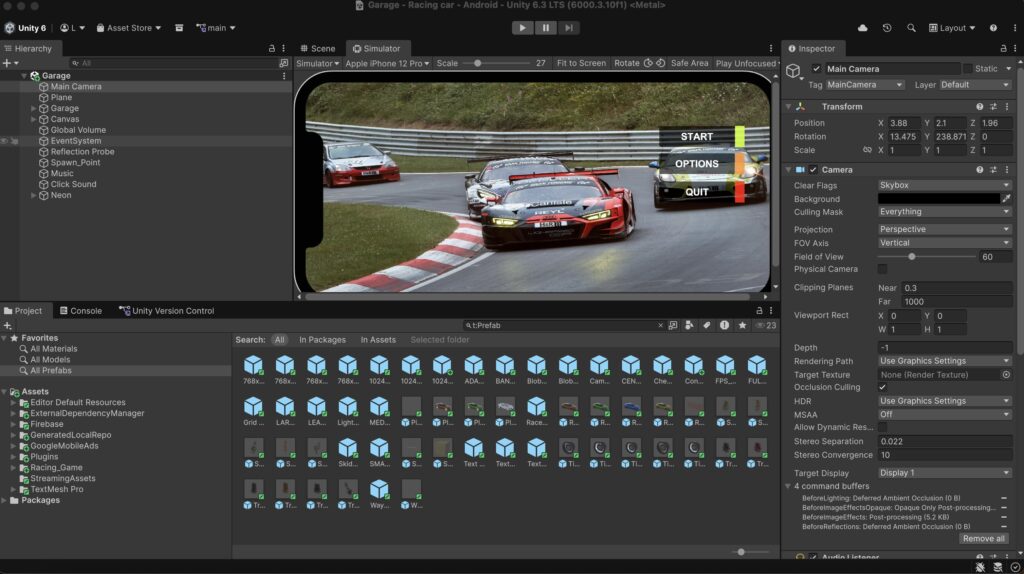
THE “TREND” ILLUSION: MY RACING GAME STORY
“I saw racing games getting millions of downloads and thought: ‘I’ll build a realistic car game with custom-made terrains to make it stand out.’ I spent months manually sculpting mountains and roads, believing that high-end visuals were the ticket to success.
The Reality Check: After publishing, I realized that the racing genre is oversaturated and dominated by giant studios with massive marketing budgets. Meanwhile, my simple math quiz game—which took a fraction of the time—outperformed the car game in downloads!
The Lesson: Don’t build a game just because you see others succeeding in that genre. Find a ‘Niche’ where you can stand out with simplicity rather than getting lost trying to mimic the giants.”
Unfortunately, personal interest does not always translate into market demand.
This was my first lesson: building a game is not the same as building a product people want.
Mistake #2: I Ignored User Retention
Downloads alone do not generate revenue.
What truly matters in mobile games is user retention.
Retention measures how many players return to the game after the first session.
If players install the game, play for two minutes, and uninstall it, monetization becomes almost impossible.
Looking back at my analytics, I noticed something important.
Most players tried the game once and never returned.
THE DOWNLOAD DECEPTION: MY STRUGGLE WITH RETENTION
“Early on, I celebrated every new download. But I soon realized I was pouring water into a leaking bucket. I had thousands of installs, but my Retention Rate was a disaster; most players uninstalled the game within the first 5 minutes.
The Outcome: Google Play stopped recommending my game because the algorithm noticed players weren’t coming back.
The Hard Lesson: Success isn’t measured by who installs the game, but by who opens it on Day 2, Day 7, and Day 30. If your game doesn’t have a ‘Core Loop’ that keeps players engaged, you are wasting your marketing budget. Retention is the true engine of growth and sustainable revenue.”
This meant:
• low session time
• few ad impressions
• almost no long-term engagement
Without retention, revenue cannot grow.
This experience taught me that game design must focus on keeping players engaged, not just attracting downloads.
Mistake #3: Poor Monetization Strategy
When I first integrated ads, I treated monetization as something secondary.
I simply added interstitial ads after certain events in the game.
But I did not carefully design when and how ads should appear.
As a result, ads either appeared too frequently or in awkward moments during gameplay.
This created two problems.
First, players became frustrated and left the game.
Second, ad engagement was very low.
A better monetization system would include:
• rewarded ads for optional bonuses
• interstitial ads between natural gameplay breaks
• balanced ad frequency
MY ADMOB FAILURE: RUINING THE PLAYER EXPERIENCE
“Early on, I didn’t care about ad timing or placement. I inserted ads randomly and abruptly. Sometimes an interstitial would pop up in the middle of gameplay, causing the player to lose, or banners would overlap with critical UI elements.
The Outcome: Players felt frustrated and uninstalled the game immediately. This explains why I earned only $3 from 5,000 downloads.
The Lesson: Monetization must be part of the ‘Game Flow.’ Now, I prioritize Rewarded Video Ads that players choose to watch and only use interstitials during natural breaks, like level transitions. Remember: A bad ad drives players away; a smart ad builds a business.”
The key lesson was that monetization should be part of the game design, not an afterthought.
Mistake #4: Weak Store Page Optimization
Another problem was the presentation of the game on the Google Play Store.
I underestimated how important the store listing is.
The store page included:
• a simple icon
• a few screenshots
• a short description
However, these elements were not optimized to attract players.
When users browse the Play Store, the icon and screenshots are often the first things they notice.
If these elements do not stand out, potential players may never download the game.
After analyzing successful games, I realized that many developers invest significant effort in store page design.
They carefully design:
• professional icons
• engaging screenshots
• clear descriptions
MY STORE TRANSFORMATION: THE ICON IS THE GATEWAY
“At first, my game icon was dull and didn’t capture the excitement of the gameplay. My screenshots were just random, raw captures without any context.
The Change: I redesigned the icon using vibrant colors to make it pop among thousands of other games. I also replaced the old screenshots with professional designs that included ‘Feature Callouts’ explaining the game’s value.
The Instant Result: My Click-Through Rate (CTR) skyrocketed! I learned that players decide to download a game in less than 3 seconds based on what they see. If your presentation isn’t catchy, no one will ever know how great your game actually is.”
This experience taught me that marketing begins before the game is even downloaded.
Mistake #5: I Expected Too Much From My First Game
Perhaps the biggest mistake was my expectations.
I assumed that my first game would quickly generate income.
In reality, most successful developers publish multiple games before achieving significant results.
Each game teaches something new.
• gameplay design
• monetization
• player behavior
• analytics interpretation
My first game was not a financial success, but it provided valuable experience that helped improve future projects.
Once I accepted this reality, I started treating each project as a learning opportunity rather than expecting immediate profit.
Understanding the Economics of Mobile Games
Another important lesson was understanding how mobile game revenue actually works.
Ad revenue depends on several factors:
• number of active users
• session length
• geographic location of players
• ad engagement
For example, if a game receives only a few hundred downloads, the total number of ad impressions will be very small.
Even with good eCPM rates, revenue remains limited.
This means developers must focus on both user growth and monetization optimization.
What I Would Do Differently Today
After learning from my first game, my approach to development changed significantly.
If I were starting again, I would follow a different process.
First, I would research the market carefully to understand player demand.
Second, I would design the gameplay loop specifically to encourage long play sessions.
Third, I would integrate monetization early in the design process.
Fourth, I would invest more time in store page optimization and marketing.
Finally, I would treat the first game as an experiment rather than expecting immediate income.
These changes can make a significant difference in long-term results.
The Hidden Value of a Failed Game
Even though my first mobile game did not make money, it was not a waste of time.
In fact, it was one of the most valuable learning experiences in my development journey.
Through that project, I learned:
• how the Google Play publishing process works
• how AdMob integration functions
• how players interact with mobile games
• how analytics reveal player behavior
These lessons helped me improve future projects.
Failure is often the fastest path to improvement.
Advice for New Mobile Game Developers
If you are planning to publish your first mobile game, here are some practical suggestions based on my experience.
First, keep your project small and manageable.
Large, complex games take longer to develop and increase the risk of unfinished projects.
Second, focus on creating a simple but addictive gameplay loop.
Many successful mobile games are extremely simple but highly engaging.
Third, integrate analytics from the beginning.
Data helps you understand how players interact with your game.
Fourth, experiment with monetization carefully.
Ads should enhance the experience rather than interrupt it.
Finally, be patient.
Success in mobile development often comes after multiple iterations.
The Real Goal of a First Game
Many developers believe that the goal of their first game should be making money.
But a more realistic goal is learning the complete development cycle.
Publishing a game teaches you about:
• development workflow
• testing and debugging
• store submission
• user feedback
• analytics and monetization
These skills are essential for long-term success.
Your first game is not the final destination.
It is the beginning of your journey as a developer.
Final Thoughts
My first mobile game did not generate the revenue I initially hoped for, but it taught me lessons that no tutorial could provide.
The mobile game market is highly competitive, and success requires more than just programming ability.
Understanding players, designing engaging gameplay, optimizing monetization, and presenting the game effectively in the store are all critical factors.
Failure is not the end of the process.
It is part of the learning curve.
Every developer who continues improving their skills and refining their approach increases their chances of building successful games in the future.
If you are working on your first mobile game, do not focus only on the outcome.
Focus on the experience, the lessons, and the progress you make along the way.
Because in game development, every project — successful or not — moves you one step closer to the next breakthrough.